In the depths of winter, when everything is buried under so much snow, you wonder how anything can cling to life, what hope there is of anything growing again; you begin to think the car may never get off the drive again; you doubt that you will ever get warm again. Everything seems cold and desolate, frozen and abandoned.
And yet…
…Spring always comes.
The sun does shine again; buds begin to form and to flower; shoots appear; the snow does go. Life does go on. From apparent death and hopelessness comes life and hope. After winter there is a spring. Some things in my garden have not survived the harsh winter, my eucalyptus is not at all well. Some plants are not made to over winter, they are designed for a time. But they do their bit for the soil, and on the compost do their bit for the next years plants. My rhubarb is sitting in last years rotted down pea shoots. Other new and interesting plants will grow where they once were. And the harshness of the winter, the warmth of the snow on the soil, will have nourished the soil for what is to come.
This is the message of Easter. From pain there is joy, from death there is life. All is not over. Life comes again. Life, perhaps not as we know it, but a life of joy and hope in the continuing presence of God.
For us, however bad and desolate things seem, it is not the end. Jesus has died – but has also risen. The old has gone – but the new has come – and look how beautiful it is, how fruitful it will be.
Apparently, someone once asked Bertrand Russell, the 20th Century philosopher, “Lord Russell, what will you say, when you die and are brought face to face with your maker?” He replied, “I shall say, ‘God, why did you make the evidence for your existence so insufficient?’”
In this reading, we see Jesus bringing to the disciples the evidence of his existence – his presence amongst them.
How must the disciples have been feeling that evening as they sat in the room? They are afraid of the Jewish authorities, and what might happen to them. Would the blame be laid on them for the disappearance of the body? And where was Jesus anyway? Mary said that she had seen him alive. He had spoken to her. What was happening?? They had seen Jesus die – so how could he be alive?? What was happening? What was it all about? But Jesus leaves them, not in wondering and fear, but comes to them. Into their need the risen Christ comes. He comes to them – and brings them his peace. They are not left alone and wondering, Jesus stands among them.
But Thomas wasn’t there that night, and without having seen Jesus himself, he finds it difficult to comprehend that Jesus can be alive.
Many things are so much easier to understand if we have seen them. You can sit and read an instruction book for a long time, but someone showing you what happens makes it much easier to grasp. I think perhaps it was like that for Thomas. He just couldn’t get his head around it all.
But Jesus isn’t upset by that. He doesn’t get annoyed with Thomas and say, ‘right that’s it, your loss not mine if you’re not going to take the other disciples word for it.’ No, Jesus come to Thomas too. He meets with him in his confusion and doubting. He lets Thomas reach out and touch him if he needs to. He brings Thomas the peace that he needs.
God does that for us too, even if it were only us, he will come to us in his peace, allow us to touch him, as he touches us. Whether we are afraid, confused, doubting, troubled or despairing, Jesus comes to us and says right where we are, “Peace be with you”.
But with the peace and presence of Jesus also comes a task. Jesus breathes his peace through us – but then we have to go. God’s peace is not just for us – God sends us. The first challenge is to receive God’s peace, the second is to do something with it. And so we too are commanded to go. That’s our response to meeting Jesus – to go and share the knowledge, and the peace and presence that go with it.
So in these days of resurrection lets allow the peace of Jesus to breathe anew into us, and then with that inner peace, to go and share that with others.
Only just over 100 years ago few people thought it possible that human beings could fly. No one except the two sons of Rev. Milton Wright who at 10:35 on the morning of Dec. 17 1903 made their first successful flight of 175 feet in a aeroplane driven by a four cylinder combustion engine. Even when I was a girl flying by aeroplane was not the norm. Today, with the advent of cheap air travel, we have become used to jetting off to all kinds of locations. All kinds of things that many years ago would have seemed impossible are now perfectly possible. Flight has changed not just individual lives, but the life of our world.
The resurrection of Jesus changes the world. People may not have thought it possible, but it has happened, and changes the life of the world – the lives of individual people.
The Empty Tomb
John’s account of the empty tomb focuses on two sets of characters: Mary Magdalene – the other women havedisappeared, and two male disciples. At this stage the two men only see the empty tomb, whereas Mary, who stays, meets the risen Lord. The challenge of Easter morning is whether we see just the empty tomb, or stay a while and meet the risen Lord.
Jesus had done something for Mary Magdalene that no one else could ever do, and she could never forget. Tradition has it that she was a sinner – possibly a prostitute, certainly someone who knew that she had got things wrong. But she also knew that she had encountered Jesus, who had forgiven and purified her life – reclaiming her from the depths to which she had sunk.
It was the Jewish custom to visit the tomb of a loved one for three days after the body was laid to rest. They couldn’t come to the tomb on the Sabbath, because to have made the journey would have broken the Sabbath law. So Mary comes as soon as she can, in the last of the night, because she can no loner stay away.
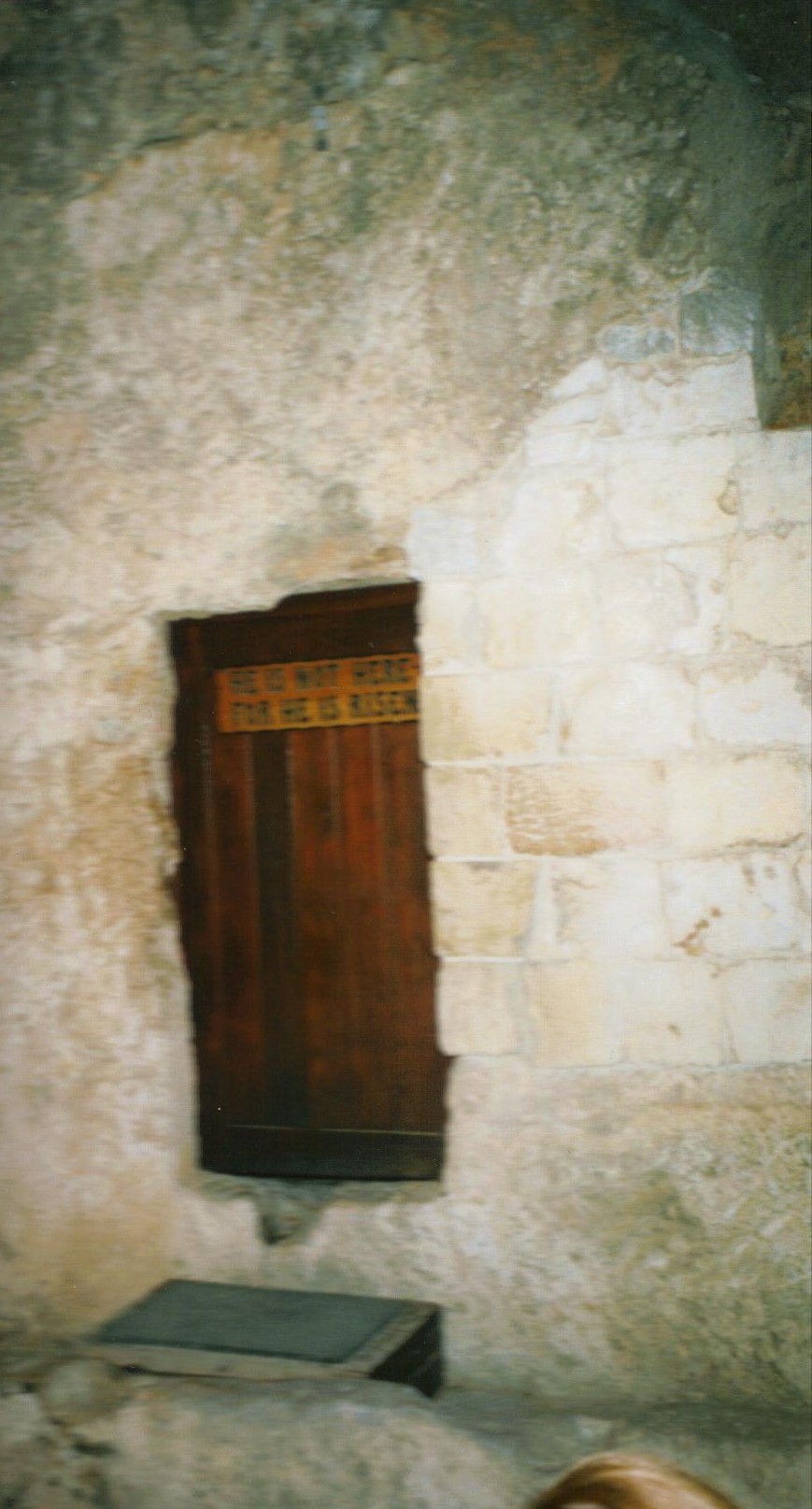
She comes to Jesus tomb to bring her worship, and discovers the stone rolled away, and the tomb is empty. She must have been both shocked and distraught.
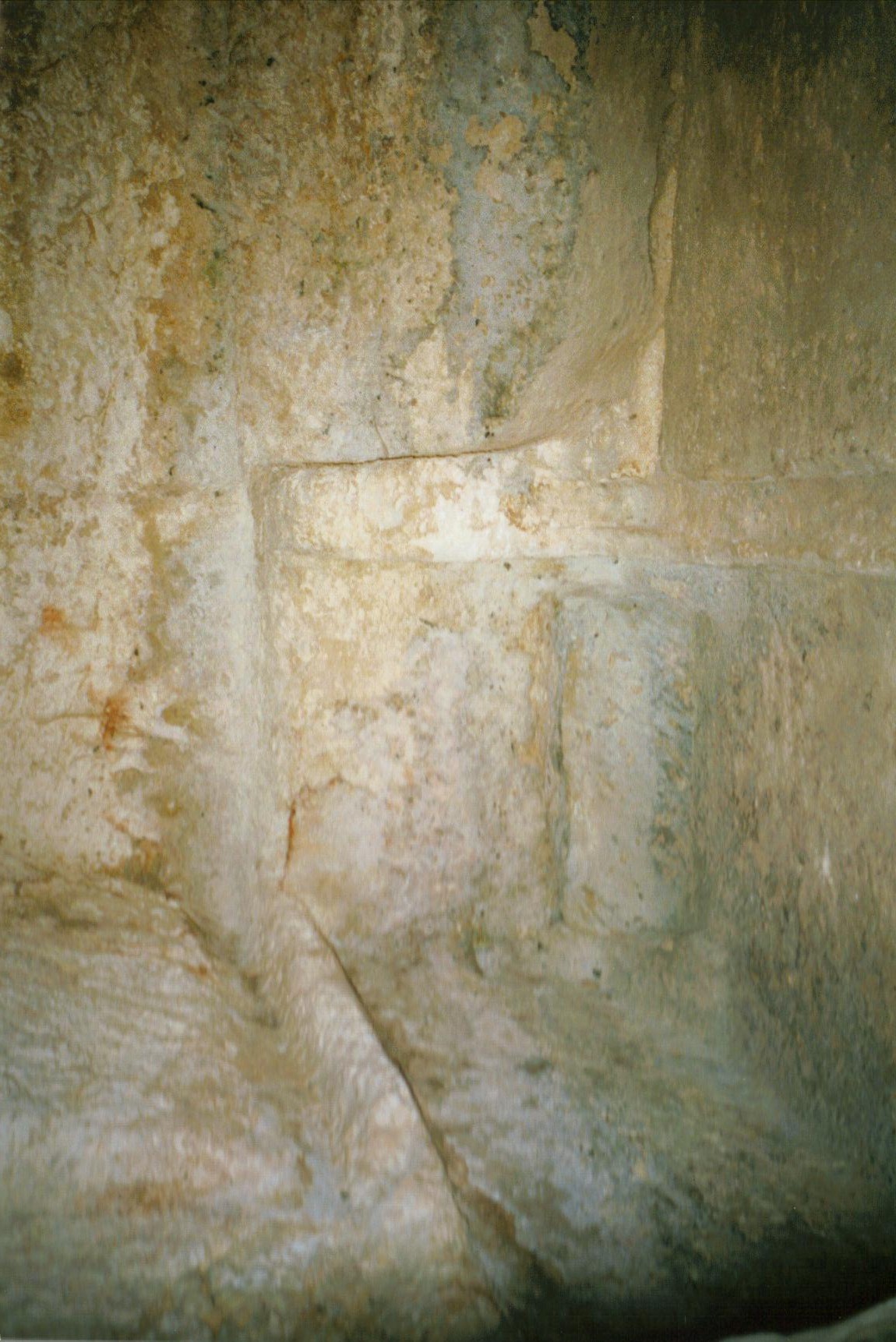
He is not here for he is risen
The fact of the matter was – and is – that Jesus is risen. He is not there, because he is not dead, he is alive.
But that leaves questions for us today. Questions for how we respond to the resurrection, and what it means in our lives today.
The empty tomb – an integral part of the story – raises a question – where is Jesus’ body? Mary jumps to the logical conclusion that the body has been stolen: ‘They have taken my Lord away.’ And then ensues her search for where the Lord has gone. I don’t know whether she assumed Peter would know, or just wants some company in the search, but she goes to tell him. And they join in the search.
Mary had come that morning expecting to find a body. To be able to do what was needed for the body. She would have been distraught at the death of Jesus, but surely now she could come and mourn in peace. But she is faced with the shock of him being missing, and she needs some answers.
Where is Jesus? A question for each of us today. Where is Jesus for us???? Dead, left in the tomb, or alive?
During his day Nikolai Ivanovich Bukharin was as powerful a man as there was on earth. He was a Russian Communist leader he took part in the Bolshevik Revolution 1917, editor of the Soviet newspaper Pravda (which by the way means truth), and a full member of the Politburo. His works on economics and political science are still read today. The story is told that one day in 1930 he went to Kiev to address a huge assembly on the subject of atheism. Addressing the crowd he aimed his heavy artillery at Christianity hurling insult, argument, and proof against it.
When he had finished, an hour later, he looked out at what he thought would be the smouldering ashes of men’s faith. “Are there any questions?” Bukharin demanded. Deafening silence filled the auditorium but then one man approached the platform and mounted the lectern. He surveyed the crowd first to the left then to the right. Finally he shouted the ancient greeting known well in the Russian Orthodox Church:
“CHRIST IS RISEN!” En masse the crowd arose as one man and the response came crashing like the sound of thunder: “HE IS RISEN INDEED!”
Jesus is not buried, he is risen; he is not dead he is alive. And his risen life, brings new life to us. John’s account of the resurrection is full of echoes of the creation story… On the first day of the week in the garden, God begins again. He makes right by his resurrection and victory over death, all the things that had gone wrong since that first perfect creation. In his rising is the possibility of recreation for humanity and the world. The resurrection is new creation for all those who want to receive it.
The story goes of a church in Hampshire that put on a performance of Stainer’s Crucifixion. The following day the choir leader put up a notice: ‘The Crucifixion – well done everybody.’ By the end of the day, someone had scribbled underneath: ‘The Resurrection – well done God!’
This reading speaks of the effect of God’s act of restoration, on individuals, peoples and nations. God can be trusted to put things right. His action in Christ transforms human lives. Broken relationships are restored, sins are forgiven, and enemies are reconciled.
The stone has to be rolled back for Jesus to come out, and more especially for Mary to come in. To come to meet with the risen Jesus, and allow his risen power to meet her. What stone in our hearts/lives needs to be rolled aside for Jesus to come in his risen power? Where can there be recreation in our lives?
Perhaps one of the most surprising new things that Jesus does, is sends Mary out. She becomes the first preacher of the resurrection, as she goes to tell the disciples. The angels message to her is quite simple: do not be afraid; Jesus has risen; come and see; go and tell.
God has won the victory and has saved each one of us. He invites us to share in that, and for us to invite others to share in it too.
As we come to Jesus, risen, changed, victorious; as we allow him to touch us, to roll away the stones of our life, and bring his recreation; he asks us to go and tell others. We should not be afraid, he is not dead, it is not over, he is alive and it is just beginning; we meet him for ourselves, and go and tell others what we have found – that God’s recreation may come in all the world.

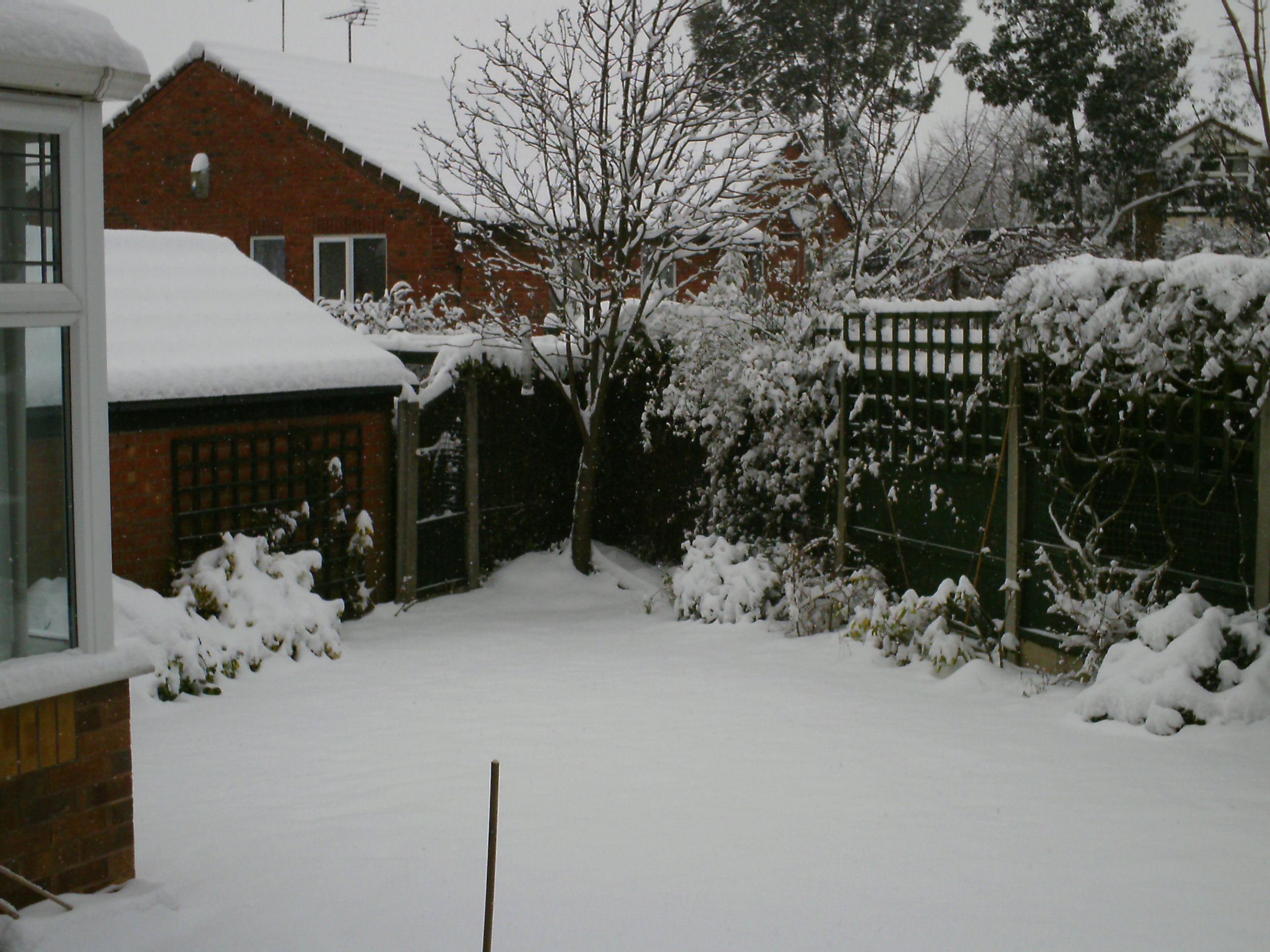 In the depths of winter, when everything is buried under so much snow, you wonder how anything can cling to life, what hope there is of anything growing again; you begin to think the car may never get off the drive again; you doubt that you will ever get warm again. Everything seems cold and desolate, frozen and abandoned.
 .
.