38 After all this, Joseph of Arimathea (he was a disciple of Jesus, but secretly, because he was intimidated by the Jews) petitioned Pilate to take the body of Jesus. Pilate gave permission. So Joseph came and took the body.
39-42 Nicodemus, who had first come to Jesus at night, came now in broad daylight carrying a mixture of myrrh and aloes, about seventy-five pounds. They took Jesus’ body and, following the Jewish burial custom, wrapped it in linen with the spices. There was a garden near the place he was crucified, and in the garden a new tomb in which no one had yet been placed. So, because it was Sabbath preparation for the Jews and the tomb was convenient, they placed Jesus in it.
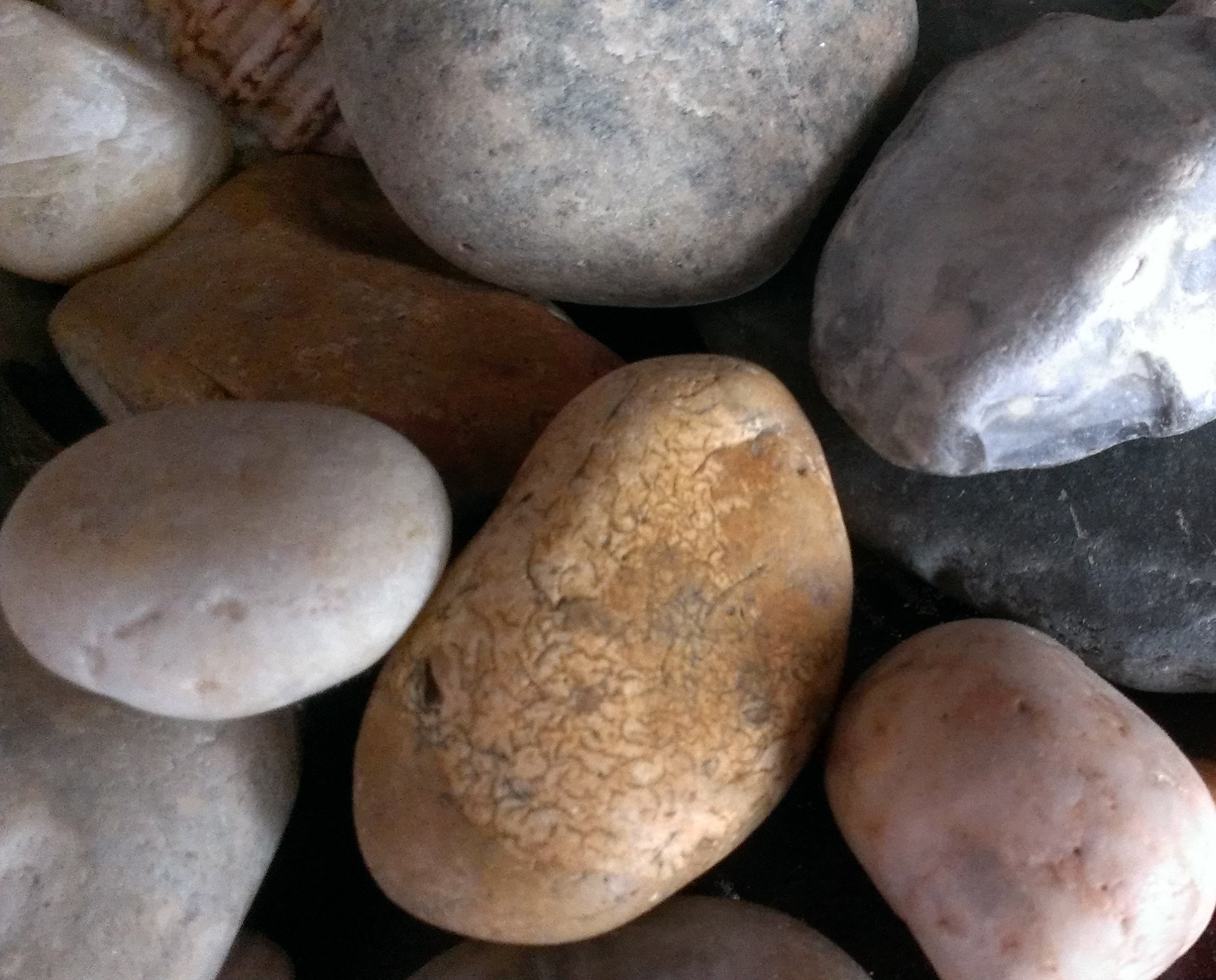
This morning, as we entered church for our Churches Together Good Friday Service, we were given a stone.
I like stones. I find them very powerful. I have my own cairn of stones from significant times and places.
So despite my original groan of how many times we’ve done the stone thing before, I picked one up. I especially picked one I liked the look of that would fit nicely in my hand. Only when I’d sat down and started to look at it, did I realise it had a huge chunk missing from it… It wasn’t quite what it first looked like, it wasn’t perfect, but broken.
The stones were really cold when we picked them up. But I held mine in my hand and it warmed up. It was lovely and smooth. Subconsciously I was stroking it lovingly. I had grown to really like it. It felt comfortable.
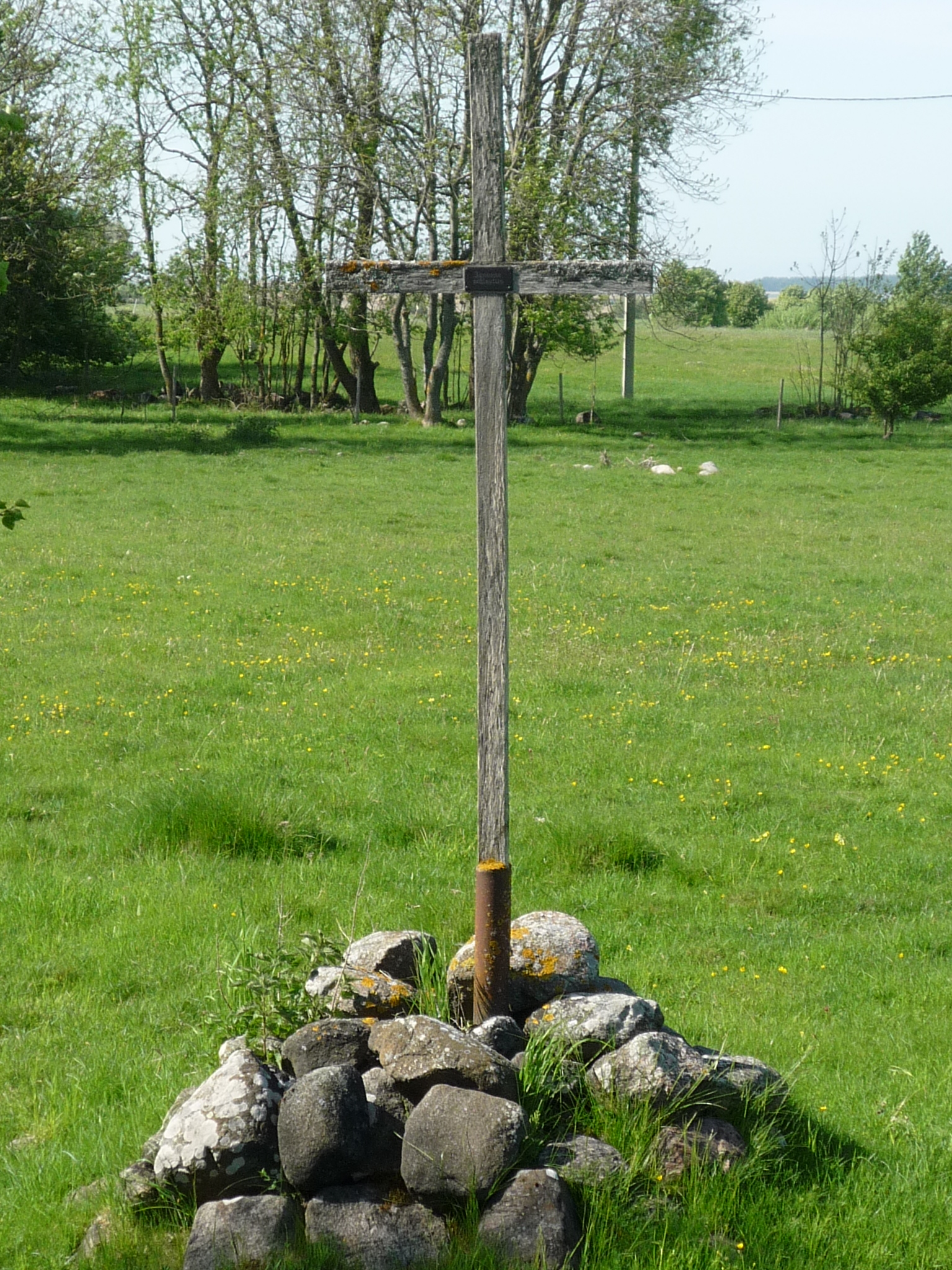
Then of course we’re told we have to let go. The stone is representing our burdens. Sins. Things that are weighing us down. What is holding us back. We are asked to lay all that at the foot of the cross.
But I like this stone…
I’ve made it mine…
I’ve got used to the feel of it…
I don’t want to let go…
@watfordgap’s response was different, as it would be:
He picked a shiny stone, and held it and rubbed it, thinking this is nice because it’s shiny and smooth – glittery even. I want to keep this because shiny things are nice. Then I was asked to give it away and thought ‘I don’t want to give away my shiny stone, shiny things are nice in life’. But we were told to take them to the cross – and actually that’s where it belongs, putting your shiny things in perspective.
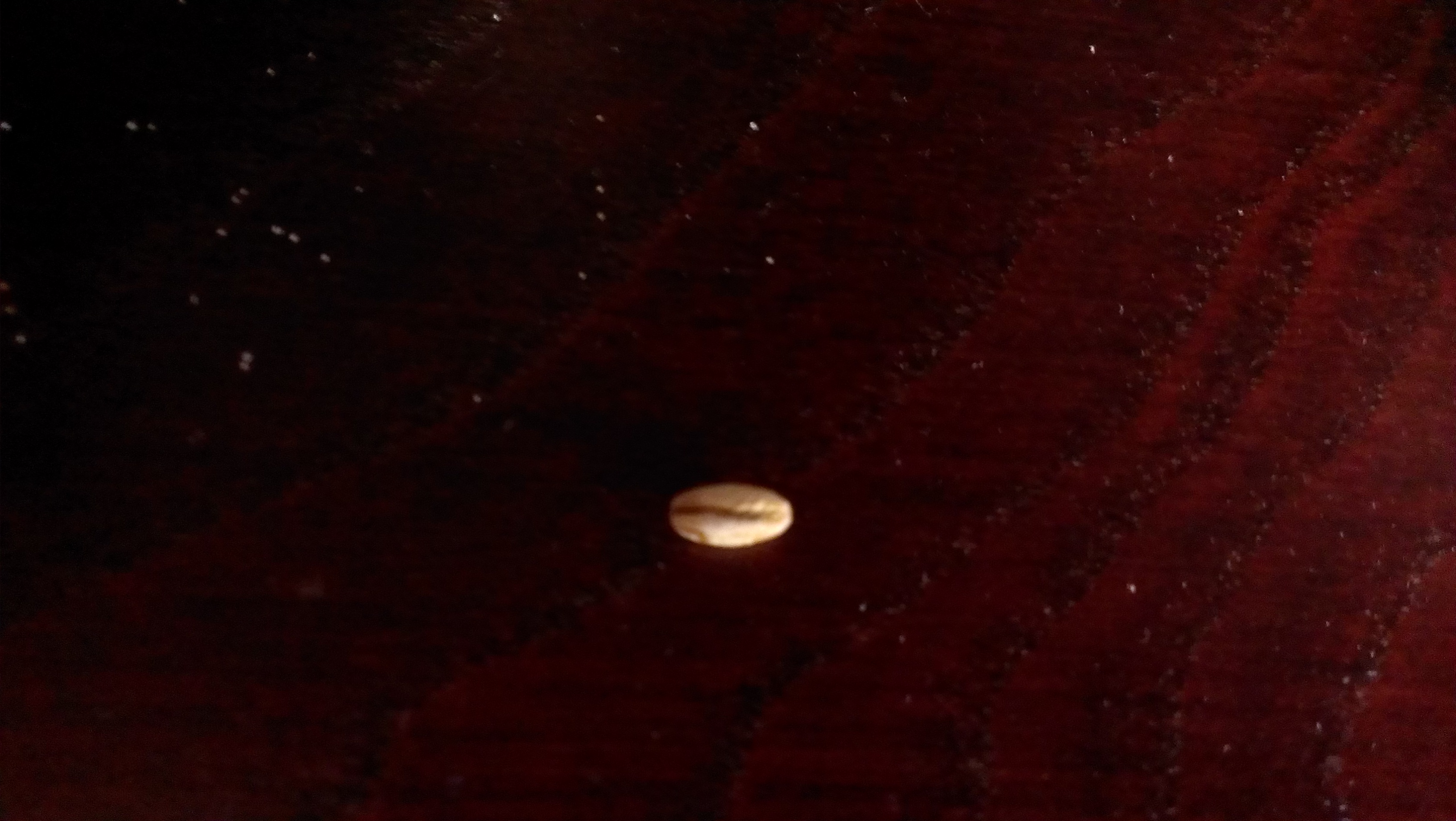
Then on the way out we were given a grain
whatever we have handed over to God, we are given back potential.
We are given a seed to go and sow, where we are. The hard stone gone, and replaced by a pliant seed, ready to burst into life.
And the closing prayer
Lord as we carry this cross into our town, may we take your forgiveness, your, love and peace
16-19 Pilate caved in to their demand. He turned him over to be crucified.
The Crucifixion
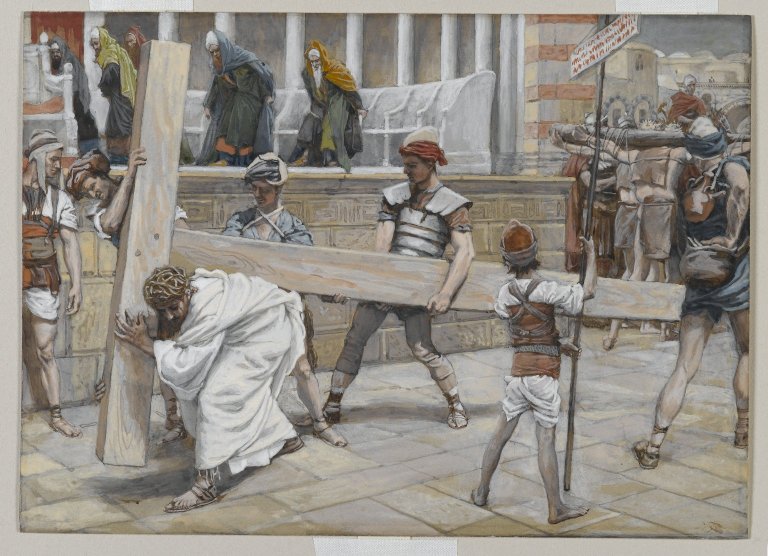
They took Jesus away. Carrying his cross, Jesus went out to the place called Skull Hill (the name in Hebrew is Golgotha), where they crucified him, and with him two others, one on each side, Jesus in the middle. Pilate wrote a sign and had it placed on the cross. It read:
jesus the nazarene
the king of the jews.
20-21 Many of the Jews read the sign because the place where Jesus was crucified was right next to the city. It was written in Hebrew, Latin, and Greek. The Jewish high priests objected. “Don’t write,” they said to Pilate, “‘The King of the Jews.’ Make it, ‘This man said, “I am the King of the Jews.”’”
23-24 When they crucified him, the Roman soldiers took his clothes and divided them up four ways, to each soldier a fourth. But his robe was seamless, a single piece of weaving, so they said to each other, “Let’s not tear it up. Let’s throw dice to see who gets it.” This confirmed the Scripture that said, “They divided up my clothes among them and threw dice for my coat.” (The soldiers validated the Scriptures!)
24-27 While the soldiers were looking after themselves, Jesus’ mother, his aunt, Mary the wife of Clopas, and Mary Magdalene stood at the foot of the cross. Jesus saw his mother and the disciple he loved standing near her. He said to his mother, “Woman, here is your son.” Then to the disciple, “Here is your mother.” From that moment the disciple accepted her as his own mother.
28 Jesus, seeing that everything had been completed so that the Scripture record might also be complete, then said, “I’m thirsty.”
29-30 A jug of sour wine was standing by. Someone put a sponge soaked with the wine on a javelin and lifted it to his mouth. After he took the wine, Jesus said, “It’s done . . . complete.” Bowing his head, he offered up his spirit.
31-34 Then the Jews, since it was the day of Sabbath preparation, and so the bodies wouldn’t stay on the crosses over the Sabbath (it was a high holy day that year), petitioned Pilate that their legs be broken to speed death, and the bodies taken down. So the soldiers came and broke the legs of the first man crucified with Jesus, and then the other. When they got to Jesus, they saw that he was already dead, so they didn’t break his legs. One of the soldiers stabbed him in the side with his spear. Blood and water gushed out.
35 The eyewitness to these things has presented an accurate report. He saw it himself and is telling the truth so that you, also, will believe.
36-37 These things that happened confirmed the Scripture, “Not a bone in his body was broken,” and the other Scripture that reads, “They will stare at the one they pierced.”