1 Blessed is the one who does not walk in step with the wicked or stand in the way that sinners take or sit in the company of mockers, 2 but whose delight is in the law of the Lord, and who meditates on his law day and night. 3 That person is like a tree planted by streams of water, which yields its fruit in season and whose leaf does not wither – whatever they do prospers.
4 Not so the wicked! They are like chaff that the wind blows away. 5 Therefore the wicked will not stand in the judgment, nor sinners in the assembly of the righteous.
6 For the Lord watches over the way of the righteous, but the way of the wicked leads to destruction.
In our contemporary world, this passage from Proverbs seems incredibly non politically correct, patronising and demeaning of women. It appears to reduce women to their role as a good wife, all the lovely things they can do for their husbands, and can even come across as a pat on the head for the good little wife. Being a wife is not the same today as it was when Proverbs was written – and many more are not wives than are.
So do we just reject this passage as old fashioned twaddle? Or do we seek to find if it has something to say to us today?
This passage is not a charter for trying women to the kitchen sink. Can it be a picture of love and care? A vision of how to live together? Indeed if we read on, this woman is more than a good little housewife, she is bringing in the food, buying and selling and planting, she makes her own money and her ‘goodness’ goes beyond her good looks to her heart – and her husband is called on to praise her and appreciate her. Can we find in it some pointers for us all – men, women, living with someone or alone, of how to live a good life? I hope so!
Can we be good to others? Be dependable, whoever we are dealing with? Can we serve, not just those we love, but those who might perhaps be expected to serve us? Can we help the poor and needy? See what needs doing and do it? I may never be graceful in movement, but can I have a graceful nature, not barging in trampling on others thoughts and feelings? Can I be sensible and offer thoughtful advice? Do I honour the Lord in all I do?
These things are attributes to live by, not just as a spouse, but as a member of society.
(Of course Rachel Held Evans has already written brilliantly on this passage)
10 A truly good wife is the most precious treasure a man can find! 11 Her husband depends on her, and she never lets him down. 12 She is good to him every day of her life, 13 and with her own hands she gladly makes clothes.
14 She is like a sailing ship that brings food from across the sea. 15 She gets up before daylight to prepare food for her family and for her servants. 16 She knows how to buy land and how to plant a vineyard, 17 and she always works hard. 18 She knows when to buy or sell, and she stays busy until late at night. 19 She spins her own cloth, 20 and she helps the poor and the needy. 21 Her family has warm clothing, and so she doesn’t worry when it snows. 22 She does her own sewing, and everything she wears is beautiful.
23 Her husband is a well-known and respected leader in the city. 24 She makes clothes to sell to the shop owners. 25 She is strong and graceful, as well as cheerful about the future. 26 Her words are sensible, and her advice is thoughtful. 27 She takes good care of her family and is never lazy. 28 Her children praise her, and with great pride her husband says, 29 “There are many good women, but you are the best!”
30 Charm can be deceiving, and beauty fades away, but a woman who honors the Lord deserves to be praised. 31 Show her respect— praise her in public for what she has done.
There are some questions that are life-changing, they take our lives from one course and head them into another. When Mr Pamspermbulation asked me to me to marry him was one of those occasions. I had to make a fundamental decision about what I thought of him. Did I love him, trust him, could I spend the rest of my life with him, working together with one purpose, growing and nurturing the life ahead we were committing to? Important questions.
Our relationship with God is a similarly life-changing question. The answer a life-long commitment.
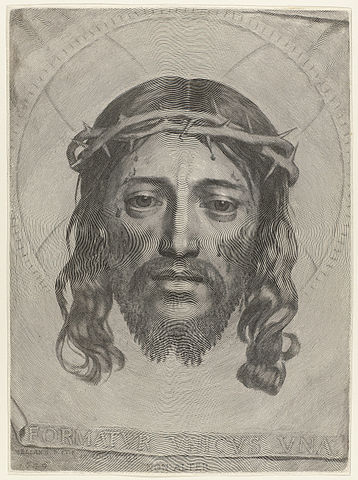
What I think of Jesus, who and what I believe him to be is The Most Important Question, because my answer to that should effect my whole life. If I believe he is God, and come to show God and his ways to us, then that should inform every part of my life – how I act, how I treat others, what I say and do, where I see God, how I listen and respond to him. All are founded in and on what I believe about Jesus – and through him God.
Jesus asks, not what others are saying, what they think, what we’ve heard, but what I think, what I believe, and perhaps more importantly – what I am going to do about it.
Jesus is inviting the disciples to a journey of commitment and all that involves. He makes the same invitation to you and I. There will be some astoundingly awesome mountain top experiences, but there will be some dark and difficult times too. That is what walking with someone else involves. Jesus knew more than most about suffering. Following him was not, and is not, the easy choice, the soft option; it has elements of pain, despair and rejection. There will be some very dark times, Jesus wants all who may join him to be clear about what they are getting in to.
Choosing God is not about having your own way, it is about having his way and looking out for the good of others, putting them before ourselves, that the world may flourish. But what we will get back if we live that way will be immense. In God’s ways, we will always get back waaaaaay more than we give.
But it’s a choice.
What do you think about God? What do I?
And how is the answer to that question going to affect my life, the way I look at others and the way I live.
Lord,
you ask me what I think of you
and you wait
patiently
for my answer,
as I work out
what you mean in my life,
if I can trust,
follow
and work with you.
But you are not looking for empty words,
a vague commitment,
an empty promise,
you want to see how my decision
works out in my life,
in my dealings with others,
and my love of you.
You invite me on a journey,
a journey of life,
of ups and downs,
of cost and commitment,
of promise and hope.
So today,
I come before you
and give you my answer
to The Most Important Question,
follow you
and invite you
to work through my life
27 Jesus and his disciples went to the villages near the town of Caesarea Philippi. As they were walking along, he asked them, “What do people say about me?”
28 The disciples answered, “Some say you are John the Baptist or maybe Elijah. Others say you are one of the prophets.”
29 Then Jesus asked them, “But who do you say I am?”
“You are the Messiah!” Peter replied.
30 Jesus warned the disciples not to tell anyone about him.
Jesus Speaks about His Suffering and Death
31 Jesus began telling his disciples what would happen to him. He said, “The nation’s leaders, the chief priests, and the teachers of the Law of Moses will make the Son of Man suffer terribly. He will be rejected and killed, but three days later he will rise to life.” 32 Then Jesus explained clearly what he meant.
Peter took Jesus aside and told him to stop talking like that. 33 But when Jesus turned and saw the disciples, he corrected Peter. He said to him, “Satan, get away from me! You are thinking like everyone else and not like God.”
34 Jesus then told the crowd and the disciples to come closer, and he said:
If any of you want to be my followers, you must forget about yourself. You must take up your cross and follow me. 35 If you want to save your life, you will destroy it. But if you give up your life for me and for the good news, you will save it. 36 What will you gain, if you own the whole world but destroy yourself? 37 What could you give to get back your soul?
38 Don’t be ashamed of me and my message among these unfaithful and sinful people! If you are, the Son of Man will be ashamed of you when he comes in the glory of his Father with the holy angels.




 Pam's Perambulation