
Rising From Sleep

•February 17, 2013 • Leave a Comment

And now, we turn to the paintings:

The first of Stanley Spencer’s, Christ in the Wilderness paintings that Stephen Cottrell looks at is ‘Rising From Sleep in the Morning’

The Picture can be seen here (on page 2).

I don’t know about you, but my rising from sleep is usually more along the lines of Dolly Parton’s 9 to 5, “Tumble outta bed, And stumble to the kitchen”, than this vision here of Christ.

He is reaching straight up.  Greeting and welcoming the day.  His garment and the surrounding earth look like a flower, the stamen reaching out to the sun, opening itself up to the arrival of bees and other visitors for pollination.
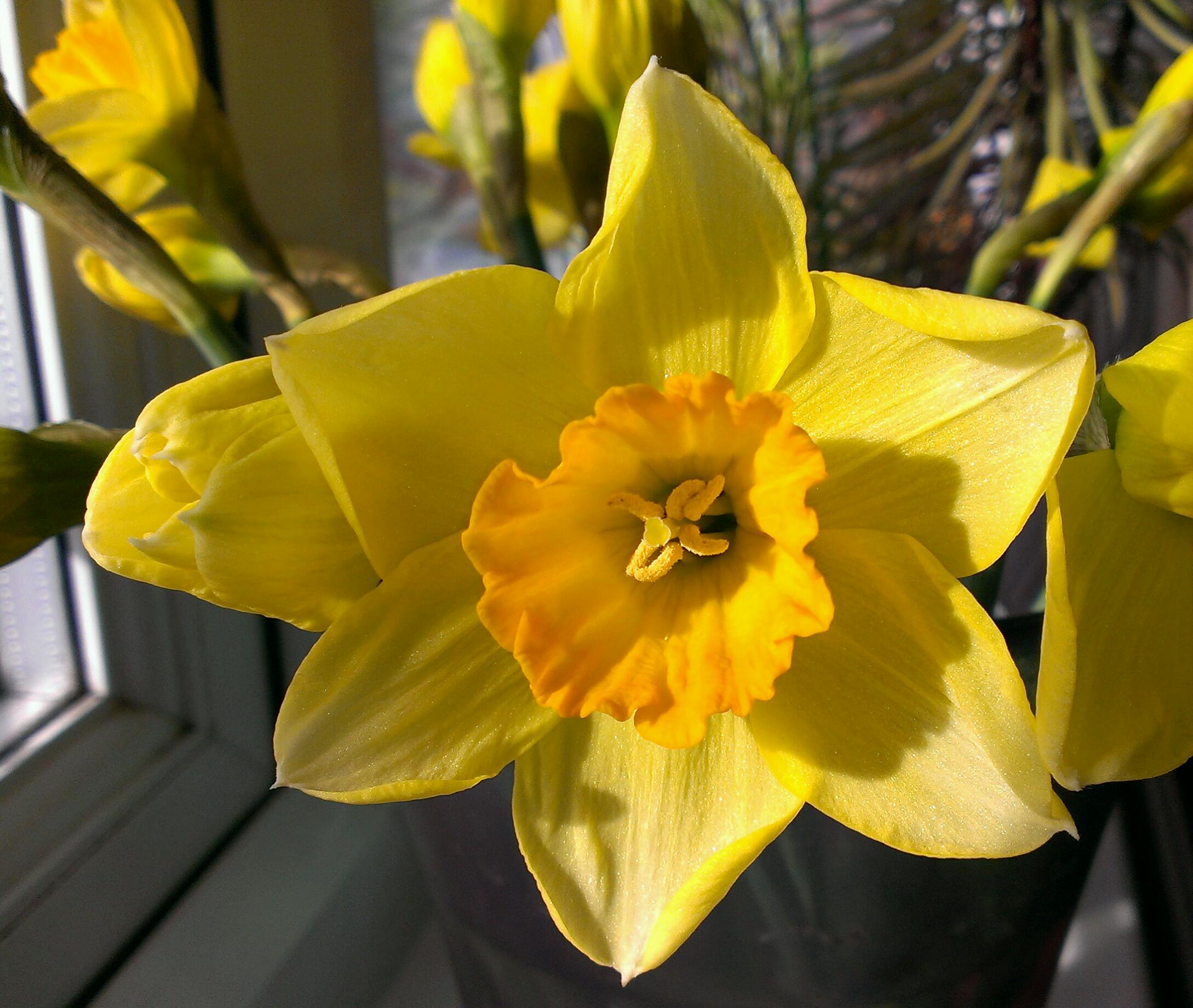
IMAG0541_1

It also reminds me of my sons when they used to be in their cots.  Reaching up to be lifted out.  Ready to start a new day and all it holds.

Jesus also seems to be in a hole in the ground, he is reaching up – waiting to be lifted from the hole he is in?

Ready and waiting.  Reaching out.  Waiting for pollination.

Is this how I start my day?

Can I start it, ready for what God is going to do?  Reaching out to him?  Ready for him to pluck me from where I am and set me down into all life can hold?  Waiting for him to bear his fruit in my life?

Lord,

this day

I reach out to you.

I open myself to all you have to bring to me,

to what you want to do in me.

These are my thoughts just looking at the picture, now I’ll see what Stephen Cottrell says…

Much of this is on a similar theme to Claire Maxim’s comments.  She is also following this book and has some good things to say

This year for Lent, I am reading Christ in the Wilderness by Bishop Stephen Cottrell, published by SPCK, reflecting on Stanley Spencer’s paintings of that title.

I’m not necessarily going to blog every day on it, just when something leaps out at me – and they will be thoughts rather than full blog posts.

Entering The Desert

•February 16, 2013 • 2 Comments

Christ in the Desert I.N. Kramskoi (1837-1887)

Stephen Cottrell shares the thought that

To look at these paintings is itself an invitation to enter the desert through the doorway of your imagination (p17)

He then goes on to quote Rowan Williams, saying “a desert is an unpopulated place, and if we are to let God give what God wants we must somehow find that unpopulated place in ourselves” .

The desert is a place where all is stripped away.  We cannot rely on the usual things we rely on.  There is nothing and no one.  Just ourselves and our thoughts – our own inner resources.  In the desert place, we find out exactly what they are, and we discover what they can be.

The wilderness is a place of pain.  A place of not knowing.  A place of utter despair.

But in that place we can find what it is God wants to give us, because we have nothing else left.

Stephen Cottrell goes on to say,

No one owns a desert… We come to it to be alone and to place ourselves in the presence of God… In the desert we are put back in touch with raw and basic necessities.  (p19)

In the desert we have to decide what blocks we are going to use to rebuild our lives.  We have the space to decide that.  The opportunity to turn to God and ask him to give us what he has to give.  To not be dazzled by easy options – that aren’t right.

The bare emptiness of the desert is also a place of expansive discovery (p19)

However painful, we need the desert experience.  To be ourselves before God.  To have the opportunity to take stock, to face our fears and challenges, to allow God to equip us.

We can find ourselves there, and we can find Christ (p19)

I pray that I might.

This year for Lent, I am reading Christ in the Wilderness by Bishop Stephen Cottrell, published by SPCK, reflecting on Stanley Spencer’s paintings of that title.

I’m not necessarily going to blog every day on it, just when something leaps out at me – and they will be thoughts rather than full blog posts.

The Imprint of God

•February 15, 2013 • 3 Comments

On Spencer’s “bread-and-butter” paintings, Stephen Cottrell notes,

because he believed that even the tiniest little thing could bear the imprint of God and therefore the majesty of the whole, each petal of each daisy is lovingly rendered (p8)

Do I see the imprint of God in every thing?  In every one? Do I pause and look?  How might life be different if I do?

Time to look for the imprint of God?

This year for Lent, I am reading Christ in the Wilderness by Bishop Stephen Cottrell, published by SPCK, reflecting on Stanley Spencer’s paintings of that title.